Science Bulletins: Attachment Theory—Understanding the Essential Bond
In 1958, psychologist John Bowlby pioneered "attachment theory," the idea that the early bond between parent and child is critical ...
American Museum of Natural History
Science Bulletins: Sharks—the Present (1 of 2)
Marine biologists in South Carolina head out on the water to catch and tag sharks, and to collect genetic samples that will be ...
American Museum of Natural History
Science Bulletins: Super- Star of the Universe
A local star is the most massive ever detected.
American Museum of Natural History
Science Bulletins: The Ecology of Climate Change
The boreal forest, which stretches across northern latitudes just south of the Arctic Circle, is a key region for studying climate ...
American Museum of Natural History
Science Bulletins: Brain Evolution—The Sweet Smell of Success
A good sense of smell may have contributed to the development of certain kinds of social functions in Homo sapiens, according to ...
American Museum of Natural History
Science Bulletins: Roads Influence Animal Genes
Roads connect people, but they separate animals.
American Museum of Natural History
Science Bulletins: Decoding the DNA of Extinct Species
Caves were important refuges for humans and animals that coexisted during the late Pleistocene, the epoch of ice ages that ...
American Museum of Natural History
Science Bulletins: Eight New "Natural Wonders" Listed
In July, the United Nations Educational, Scientific, and Cultural Organization (UNESCO) added eight new natural sites to its World ...
American Museum of Natural History
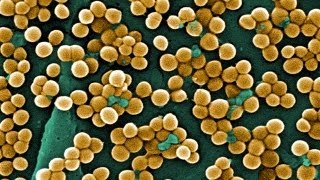
Science Bulletins: MRSA—The Evolution of a Drug-Resistant Superbug
The human body is a diverse bacterial ecosystem. Humans are hosts to trillions of microbes, most of which are harmless or even ...
American Museum of Natural History
Science Bulletins: Invasive Species
It's war in many ecosystems around the world as invasive and native species battle for primacy. Facing the increased exchange of ...
American Museum of Natural History
Science Bulletins: New Fossil Show Ancient Disease
Tuberculosis has a long history in humans. While Egyptian mummies a few thousand years old show evidence of the disease, ...
American Museum of Natural History
Science Bulletins: PETM - Unearthing Ancient Climate Change
Fifty-five million years ago, a sudden, enormous influx of carbon flooded the ocean and atmosphere for reasons that are still ...
American Museum of Natural History
Science Bulletins: Our Ancient Relatives Born with Flexible Skulls
A new study of the skull of an early hominin child provides a better understanding of the evolutionary timeline for modern human ...
American Museum of Natural History
Science Bulletins: Underwater Microscope Zooms in on Tiny Marine Life
Most plankton are too small to be seen with the naked eye. But despite their size, they are vital in marine and freshwater ...
American Museum of Natural History
Science Bulletins: Tracing the First Americans
When and where did humans first enter the Americas—and what routes did they travel to colonize the continents? These are big ...
American Museum of Natural History
Science Bulletins: Introducing the Denisovans
New research led by scientists at Germany's Max Planck Institute for Evolutionary Anthropology confirms that a 40000-year-old ...
American Museum of Natural History
Science Bulletins: Thinking in Symbols
Modern human culture underwent a "creative explosion" in Ice Age Europe 40000 to 10000 years ago. The evidence, which ...
American Museum of Natural History
Science Bulletins: Sharks—the Past (2 of 2)
Scientists use CT scanning technology to compare living and fossil sharks. Over their 450 million-year evolutionary history, sharks ...
American Museum of Natural History
Science Bulletins: The Rise of Oxygen
Follow geologists as they hunt for, pickaxe, and test rock samples from the 2.5 billion year old Huronian Supergroup, a ...
American Museum of Natural History
Science Bulletins: More Species, Better Water?
Biodiversity benefits humankind in many ways: it can inspire medical innovation, boost human health, and even process waste.
American Museum of Natural History
Science Bulletins: On the Hunt for a Balanced Diet
Biologists had long assumed that predators were more concerned with the quantity of their food than the quality, but a recent study ...
American Museum of Natural History
Science Bulletins: The Transit of Venus
For a handful of hours in June 2012, Venus's orbit carried it directly across the face of the Sun, providing a spectacular backlit view ...
American Museum of Natural History
Science Bulletins: Jellies Down Deep
This Bio Bulletin, which features spectacular underwater footage, follows scientists at the Monterey Bay Aquarium Research ...
American Museum of Natural History
Science Bulletins: More Roads Encourage Wildlife Poaching
A sweeping satellite analysis by researchers at the Woods Hole Research Center shows that roads have expanded more than ...
American Museum of Natural History
Science Bulletins: Rare Disorder Sheds Light on Sociability
Ongoing studies of people with a rare congenital disorder called Williams Syndrome are revealing the genetic basis and brain ...
American Museum of Natural History
Science Bulletins: Record- Breaking Fire Season
The southeastern United States is now in its worst drought in over a century. Lack of rain has exacerbated forest fires across the ...
American Museum of Natural History
Science Bulletins: New Fossils Recast Tyrannosaur Evolution
Fossils of two never-before-seen species of tyrannosaur are overturning long-held ideas about the diversity and evolution of this ...
American Museum of Natural History
Science Bulletins: Tibetans Show Recent Evolution
To understand how the native people of the Tibetan plateau have adapted to their extreme low-oxygen environment, several ...
American Museum of Natural History
Science Bulletins: Extinct Cave Bear DNA Decoded
Scientists have traditionally looked to fossil evidence of extinct species to understand how Earth's plant and animal life evolved ...
American Museum of Natural History
Science Bulletins: Toxic Sludge Caught on Satellite
In what may have been the most devastating ecological disaster in Hungary's history, on October 4, 2010, a river of red sludge ...
American Museum of Natural History
Science Bulletins: Twitter Tracks Cholera Spread in Haiti
In the early stages of an epidemic, access to information about emerging cases is critical for health care workers trying to control ...
American Museum of Natural History
Science Bulletins:Tuberculosis's Hidden Strategy
Tuberculosis can linger for years, but usually carries no symptoms. Scientists from the International Center for Genetic ...
American Museum of Natural History
Science Bulletins: Elusive Y-Dwarfs Discovered
Brown dwarfs are cosmic objects that are intermediate between stars and planets. Scientists have spent more than a decade ...
American Museum of Natural History
Science Bulletins: Urban Sprawl—Phoenix
Most people think of urban sprawl as the construction of roads and buildings at a rate that exceeds population growth. Phoenix ...
American Museum of Natural History
Science Bulletins: Orangutan Genome Finished
A team of more than a hundred researchers has sequenced all the genes of the orangutan, the third closest living relative of ...
American Museum of Natural History
Science Bulletins: Mapping Microbes in the Human Body
The Human Microbiome Project, an initiative of the National Institutes of Health, is cataloguing trillions of microbes that live within ...
American Museum of Natural History
Lee Kong Chian Natural History Museum - Museum for the Future
The Lee Kong Chian Natural History Museum at the National University of Singapore strives to be a leader in Southeast Asian ...
Lee Kong Chian Natural History Museum
Science Bulletins: Zircons—Time Capsules from the Early Earth
Zircons are tiny crystals with a big story to tell. Some of these minerals are the oldest Earth materials ever discovered, and ...
American Museum of Natural History
Science Bulletins: How Successful Is Wildlife Conservation?
How much do habitat protection, anti-trafficking laws, reintroductions, and other conservation efforts help save Earth's threatened ...
American Museum of Natural History
Science Bulletins: Unraveling the Origins of the Flores Fossils
Since the diminutive hominid fossils—the so-called "hobbits"—were discovered on the Indonesian island of Flores in 2003, ...
American Museum of Natural History
Science Bulletins: New Frog on the Block
A new species of frog recently announced itself to scientists studying amphibians in the area surrounding New York City.
American Museum of Natural History
Science Bulletins: Scientists Identify Earliest Primate
Two remarkably preserved fossil finds near Yellowstone National Park show how primates first diverged from the rest of the ...
American Museum of Natural History