Lee Kong Chian Natural History Museum celebrates fifth anniversary
The Lee Kong Chian Natural History Museum at the National University of Singapore turns five in 2020 and will be holding a series of e-events from Sep 5 to ...
CNA
Force Thirteen US Onsite at the Natural Science Museum
Our US Director took a day to take in the Natural History and Natural Science Museum in Raleigh NC it was here he found a Collage of Hurricane Related Facts ...
Force Thirteen XTRA
National Museum for Natural History officially opens today
The National Museum for Natural History officially opens today to the public! Here's a sneak peek.
Manila Bulletin Online
Science Bulletins: Ancient African Toolmakers Had an Edge
South Africa's Blombos Cave has yielded new evidence of early cultural advancement in our species.
American Museum of Natural History
Science Bulletins: The Oil Spill's Other Victims
http://amnh.org/rc10 Beyond oil-coated pelicans, the Gulf spill imperils many lesser-known species such as marsh grasses, seaweed, and deep-sea ...
American Museum of Natural History
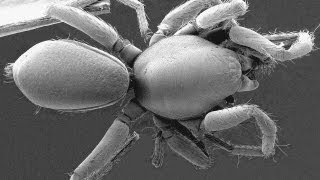
Science Bulletins: Seeking Spiders—Biodiversity on a Different Scale
Recognizing the tiny species of any ecosystem is hugely important for defining its overall diversity. But miniscule forms of life are often invisible to conservation ...
American Museum of Natural History
Science Bulletins: Ancient Graves Reveal Family Ties
In 2005, a team of archaeologists unearthed a well-preserved group of 4600-year-old graves in the agricultural region of Eulau, Germany. People were buried ...
American Museum of Natural History
Science Bulletins: Early Human Walked Upright
Since a few 6-million-year-old bones of the species Orrorin tugenesis were discovered in Kenya in 2000, scientists have not been certain that Orrorin could walk ...
American Museum of Natural History
Science Bulletins: Deep-Sea Cephalopods Hide Using Light
Many kinds of octopus, cuttlefish, and squid are masters of disguise. They conceal themselves using chromatophores—specialized skin cells that hold pigment ...
American Museum of Natural History
Science Bulletins: Making Fossils Hear
When did human beings first develop the ability to speak? This remains one of the most exciting and perplexing questions for researchers of human evolution ...
American Museum of Natural History
Science Bulletins: Neanderthal DNA Persists in Humans
When modern humans migrated out of Africa between 100000 and 60000 years ago, they encountered and bred with Neanderthals, our close relatives living in ...
American Museum of Natural History
Science Bulletins: Scientists Peer Inside "Superbug" Genome
For decades MRSA, or methicillin-resistant Staphylococcus aureus, has been afflicting hospital patients and prison inmates with life-threatening and ...
American Museum of Natural History
Science Bulletins: Stem Cell Advance Study of Lou Gehrig's Disease
Lou Gehrig's disease, or amyotrophic lateral sclerosis (ALS), has no cure. It causes motor neurons in the central nervous system to shrink, resulting in severe ...
American Museum of Natural History
Dinosaur Extinction: Noah's Flood or an Asteroid?
Natural History Museums attribute the dinosaur extinction to the Chicxulub asteroid hitting the Yucatán peninsula of Mexico 66 million years ago. How can this ...
Genesis Apologetics
Science Bulletins: Massive Study Links Genes to Disease
A sweeping new study by 50 research groups that comprise the Wellcome Trust Case Control Constortium has identified genetic markers for seven common ...
American Museum of Natural History
How Creativity Works | Solve The Riddle With Creative Thinking
How does creativity work? Solve this riddle to see how creative you are while we talk about the ways in which creativity takes shape from the brain to the real ...
Curious Tangents
Science Bulletins: Tibetans Show Recent Evolution
To understand how the native people of the Tibetan plateau have adapted to their extreme low-oxygen environment, several research teams are comparing the ...
American Museum of Natural History
Science Bulletins: Making Medicine from Nature
Three cutting-edge medical technologies inspired by biodiversity. This Bio Bulletin snapshot is third in a series to celebrate the 2010 International Year of ...
American Museum of Natural History
Science Bulletins: New Brain Model of Earliest Primate
Researchers from the universities of Florida and Winnipeg have reconstructed the brain of Ignacius graybullianus, one of the earliest primates known, from a ...
American Museum of Natural History
Science Bulletins: Unraveling the Origins of the Flores Fossils
Since the diminutive hominid fossils—the so-called "hobbits"—were discovered on the Indonesian island of Flores in 2003, scientists have debated where to ...
American Museum of Natural History
Science Bulletins: Supernovas Step by Step
Scientists are reproducing supernova explosions on computer screens.
American Museum of Natural History
Nature's Fury: Tsunami Science - Reducing the Risk
The scientific data left in the wake of the horrific December 26, 2004 tsunami is proving invaluable to better prepare for future events. Learn more at Nature's ...
American Museum of Natural History
TERRIFYING Dinosaur Find!? (Discovering Spinosaurus Part I)
This is the first Episode in a Series on Spinosaurid Dinosaurs--their biology, evolution, and scientific history. We begin our journey in England where in 1983 an ...
The Living Past
Science Bulletins: Curiosity Rover Heads for Mars
The biggest and most technically advanced rover to date is on its way to Mars. In the latest Astro Bulletin from the Museum's Science Bulletins program, follow ...
American Museum of Natural History
Science Bulletins: An Odd Ellipse
A new Hubble Space Telescope image shows a galaxy with a complex identity.
American Museum of Natural History
Nature's Fury: Yellowstone - Monitoring the Fire Below
The magma chamber responsible for Yellowstone's past volcanic activity still lies beneath, and continues to steam, heat, and shift the park landscape.
American Museum of Natural History
Dinosaurs of Copper Ridge - Part 2/2
This video is part 2 in a 2 part series about reconstructing the dinosaurs that left their tracks at Copper Ridge, near Moab Utah. In this part I discuss ...
BRIAN ENGH PALEOART
Science Bulletins: Genes and Geography—They Go Together
Scientists can now analyze a person's genes to pinpoint what country his or her ancestors hailed from. A team of U.S. researchers recently performed a massive ...
American Museum of Natural History
Science Bulletins: Neanderthal Genome Sheds Light on Humanity
Neanderthals were our closest relatives. These stocky, heavy-browed humans lived from about 200000 to 30000 years ago in Eurasia and the Middle East.
American Museum of Natural History
Science Bulletins: Brain Control of the Grasping Hand
Many primates, notably humans, have fine motor skills that permit grasping and manipulation of small objects, essential adaptations for tool use. Curiously, the ...
American Museum of Natural History
Science Bulletins: Earth's Green Carbon Machine
The seasonal growth of plants—both on land and in the ocean—is one of the most striking patterns visible on Earth from space. This green "pulse" of life is ...
American Museum of Natural History
Science Bulletins: Human Stems Cell Breakthrough
A long-sought milestone has been reached in stem cell research: transforming adult cells directly into stem cells without having to use an embryo as a vehicle.
American Museum of Natural History
Science Bulletins: The Roots of a Malaria Menace
Malaria kills more than a million people every year. Recently, an international team of biologists used genetic techniques to trace how the malaria parasite ...
American Museum of Natural History
Science Bulletins: "Body Clock" Found in Bone
Many body processes operate in rhythms, often called "biological clocks." A team of researchers led by Timothy Bromage at the New York University College of ...
American Museum of Natural History
Science Bulletins: In Search of Wild Variety
To help build the catalog of life, biologists at AMNH search the globe for species that have never been scientifically described. Discover seven of these new ...
American Museum of Natural History
Science Bulletins: Invasive Species
It's war in many ecosystems around the world as invasive and native species battle for primacy. Facing the increased exchange of ship ballast water among ...
American Museum of Natural History
Science Bulletins: Making Faces for Survival
Ask any person, from any country‚ to make a fearful face and you'll get the same response-eyebrows raised, eyes wide open, flared nostrils. A disgusted face, on ...
American Museum of Natural History
Science Bulletins: Skull fills Gap in Fossil Record
Some periods of human prehistory lack a substantial fossil record in key geographic locations, making it difficult to confirm genetic evidence of modern human ...
American Museum of Natural History
Science Bulletins: SpaceX Dragon Succeeds in Historic Mission
SpaceX achieved a milestone in space travel last month, becoming the first private company in the United States to successfully launch a cargo capsule, attach it ...
American Museum of Natural History
Science Bulletins: New Malaria Map
The international Malaria Atlas Project has created the most complete map of malaria risk in four decades. The team analyzed 4278 surveys of malaria infection ...
American Museum of Natural History
Science Bulletins: In Hot Pursuit of Asteroids
Asteroids, the rocky remnants left over from the formation of planets in the Solar System, offer scientists a window into the dynamics of this early period. Scientists ...
American Museum of Natural History
T Rex at Albuquerque Museum of Natural History
Code Shock