Science Bulletins: Genes and Geography—They Go Together
Scientists can now analyze a person's genes to pinpoint what country his or her ancestors hailed from. A team of U.S. researchers ...
American Museum of Natural History
Science Bulletins: Jellies Down Deep
This Bio Bulletin, which features spectacular underwater footage, follows scientists at the Monterey Bay Aquarium Research ...
American Museum of Natural History
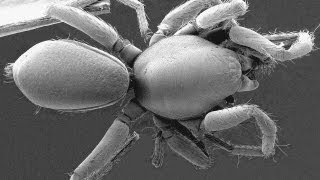
Science Bulletins: Seeking Spiders—Biodiversity on a Different Scale
Recognizing the tiny species of any ecosystem is hugely important for defining its overall diversity. But miniscule forms of life are ...
American Museum of Natural History
Science Bulletins: Keeling's Curve – The Story of CO2
As the leading greenhouse gas, carbon dioxide is one of the atmosphere's most closely watched ingredients. The scrutiny began ...
American Museum of Natural History
Science Bulletins: Super Corals—For the Future (1 of 3)
Marine biologists in Hawaii investigate so-called “super corals,” which thrive even as ocean temperatures rise. In For the Future, ...
American Museum of Natural History
Science Bulletins: Lemurs of Madagascar—Surviving on an Island of Change
On the world's fourth largest island, and virtually nowhere else, lives an entire "infraorder" of primates: the three dozen or so lemur ...
American Museum of Natural History
Science Bulletins: The Known Universe
The Known Universe takes viewers from the Himalayas through our atmosphere and the inky black of space to the afterglow of the ...
American Museum of Natural History
Science Bulletins: Skull X-Rays Reconstruct Extinct Carnivores’ Bite
Some carnivores eat only meat, while others are more omnivorous. To understand how and when these differences in carnivore ...
American Museum of Natural History
Science Bulletins: Decoding the DNA of Extinct Species
Caves were important refuges for humans and animals that coexisted during the late Pleistocene, the epoch of ice ages that ...
American Museum of Natural History
Science Bulletins: Language in the Brain
Why is it that humans can speak but chimpanzees, our closest living relatives, cannot? The human brain is uniquely wired to ...
American Museum of Natural History
Science Bulletins: Mapping Emotions in the Body
Feelings are often associated with physical reactions: terror can send chills down your spine, and love can leave you weak in the ...
American Museum of Natural History
Science Bulletins: Brain Evolution—The Sweet Smell of Success
A good sense of smell may have contributed to the development of certain kinds of social functions in Homo sapiens, according to ...
American Museum of Natural History
Science Bulletins: Supernovas Step by Step
Scientists are reproducing supernova explosions on computer screens.
American Museum of Natural History
Science Bulletins: Sharks—the Past (2 of 2)
Scientists use CT scanning technology to compare living and fossil sharks. Over their 450 million-year evolutionary history, sharks ...
American Museum of Natural History
Science Bulletins: Cloning and Conservation
On January 8, 2001, a healthy baby gaur—a large ox-like animal whose populations are now threatened throughout much of their ...
American Museum of Natural History
Science Bulletins: Sharks—the Present (1 of 2)
Marine biologists in South Carolina head out on the water to catch and tag sharks, and to collect genetic samples that will be ...
American Museum of Natural History
Science Bulletins: Mapping the Heat Beneath
As seismic waves from earthquakes pass through the planet, their patterns can reveal hidden dynamics—hotspots, deep-diving ...
American Museum of Natural History
Science Bulletins: Scientists Peer Inside "Superbug" Genome
For decades MRSA, or methicillin-resistant Staphylococcus aureus, has been afflicting hospital patients and prison inmates with ...
American Museum of Natural History
Science Bulletins: Potato Biodiversity—Ensuring the Future
Farmers in the Andes use biodiversity as insurance. The potato, a plant native to the area that is now the world's fourth most ...
American Museum of Natural History
Science Bulletins: Introducing the Denisovans
New research led by scientists at Germany's Max Planck Institute for Evolutionary Anthropology confirms that a 40000-year-old ...
American Museum of Natural History
Science Bulletins: PETM - Unearthing Ancient Climate Change
Fifty-five million years ago, a sudden, enormous influx of carbon flooded the ocean and atmosphere for reasons that are still ...
American Museum of Natural History
Science Bulletins: The Ecology of Climate Change
The boreal forest, which stretches across northern latitudes just south of the Arctic Circle, is a key region for studying climate ...
American Museum of Natural History
Science Bulletins: Thinking in Symbols
Modern human culture underwent a "creative explosion" in Ice Age Europe 40000 to 10000 years ago. The evidence, which ...
American Museum of Natural History
Science Bulletins: In Hot Pursuit of Asteroids
Asteroids, the rocky remnants left over from the formation of planets in the Solar System, offer scientists a window into the ...
American Museum of Natural History
SOS at the Natural History Museum: Nature Live
Sumatran Orangutan Society (SOS) Director Helen Buckland spoke at London's Natural History Museum on 14th June 2013 ...
SOSorangutans
Science Bulletins: Brown Dwarfs—Tail End of the Stars
Journey to the heights of Mauna Kea in Hawaii where astronomers search for brown dwarfs, cosmic bodies that are not quite stars ...
American Museum of Natural History
Science Bulletins: Obesity's Genetic Markers
The rise in obesity in many modern societies is largely a result of environmental influences, yet genetic factors can make people ...
American Museum of Natural History
Science Bulletins Data Visualization Webinar: Protecting Wildlife in a Changing Climate
As climate change alters habitats on Earth, some species are shifting their ranges. Protecting sensitive species means planning ...
American Museum of Natural History
Science Bulletins: "Hobbit" Study Takes a Step Forward
A recent study of the foot of the tiny extinct "hobbit" shows that this unusual hominid couldn't run easily. The work, which was led ...
American Museum of Natural History
Science Bulletins: Elusive Y-Dwarfs Discovered
Brown dwarfs are cosmic objects that are intermediate between stars and planets. Scientists have spent more than a decade ...
American Museum of Natural History
Science Bulletins: Ancient Humans Get a Genetic 'Census'
A new analysis of the DNA of modern humans has revealed the population size of our ancestors living 1.2 million years ago: just ...
American Museum of Natural History
Science Bulletins: GRAIL Spacecraft Ready to Map the Moon
NASA's Gravity Recovery and Interior Laboratory (GRAIL) mission has put a pair of nearly identical spacecraft in orbit around the ...
American Museum of Natural History
Science Bulletins: Brains Change with Trauma
Scientists are becoming increasingly aware of how life experiences can change both the physical structure and the function of the ...
American Museum of Natural History
Science Bulletins: More Species, Better Water?
Biodiversity benefits humankind in many ways: it can inspire medical innovation, boost human health, and even process waste.
American Museum of Natural History
Science Bulletins: Ancient African Toolmakers Had an Edge
South Africa's Blombos Cave has yielded new evidence of early cultural advancement in our species.
American Museum of Natural History
Science Bulletins: The Oil Spill's Other Victims
http://amnh.org/rc10 Beyond oil-coated pelicans, the Gulf spill imperils many lesser-known species such as marsh grasses, ...
American Museum of Natural History
Smithsonian Institution - United States National Museum - Bulletin 240 Contributions Fro... Part 1/2
Smithsonian Institution - United States National Museum - Bulletin 240 Contributions From the Museum of History and Technology ...
LibriVox Audiobooks
Science Bulletins: Earliest Human Artifacts in Eastern Europe
Scientists have dated a set of unique artifacts found in Kostenki, Russia to 45000 years old—the earliest trace of modern humans ...
American Museum of Natural History
Science Bulletins: Peking Man—Older Times, Colder Climes
In the 1930's, scientists discovered a rich collection of Homo erectus fossils near Zhoukoudian, China. The site of "Peking Man" is ...
American Museum of Natural History
Science Bulletins: New Horizons Mission to Pluto
After its discovery in 1930, Pluto was long regarded as our solar system's ninth planet. But residing in the icy realm of the outer ...
American Museum of Natural History
Science Bulletins: Warm Forecast for Coral Reefs
Watch how satellites monitor the risks posed to coral reefs by ocean warming, and see where reefs might be more resilient to ...
American Museum of Natural History
Science Bulletins: Urban Sprawl—Phoenix
Most people think of urban sprawl as the construction of roads and buildings at a rate that exceeds population growth. Phoenix ...
American Museum of Natural History