Science Bulletins: Guinea Worm—Countdown to Zero
Guinea worm, a painful parasite that once affected millions of people each year, may soon be relegated to the past. Thanks to improved health education and ...
American Museum of Natural History
Duchess of Cambridge visits Natural History Museum | 5 News
▻ The Duchess of Cambridge was taken on a journey of discovery, handling a meteorite and peering at common newts, during a visit at the Natural History ...
5 News
Dippy the dinosaur leaves Natural History Museum
He's entertained visitors to the Natural History Museum for over a century - but today was the last chance to see Dippy the Dinosaur in his famous home.
5 News
Science Bulletins: Evolution in Action—Isolation and Speciation in the Lower Congo Region
Central Africa's roiling, rapid Lower Congo River is home to an extraordinary assortment of fish—many truly bizarre. This new video by Science Bulletins, the ...
American Museum of Natural History
Science Bulletins: Sea Creatures Face the Acid Test
An AMNH scientist digs into the fossil record to discover why ammonites, a highly successful group of mollusks, perished after an asteroid strike 65 million years ...
American Museum of Natural History
Science Bulletins: Whales Give Dolphins a Lift
Many species interact in the wild, most often as predator and prey. But recent encounters between humpback whales and bottlenose dolphins reveal a playful ...
American Museum of Natural History
Science Bulletins: Melting Ice, Rising Seas
The rising temperatures of global climate change are melting the world's ice. Most notable are the shrinking ice sheets of Greenland and west Antarctica, which ...
American Museum of Natural History
Science Bulletins: Sloan Digital Sky Survey—Mapping the Universe
Taking a census of all the luminous objects in one-quarter of the visible cosmos is a hefty accounting job. It takes a specially-built telescope on task every clear ...
American Museum of Natural History
Science Bulletins: The Hunt for Planet X
A large, unseen planet may be lurking in the cold, dim reaches of our solar system. Using a combination of theory and observation, scientists have estimated the ...
American Museum of Natural History
Science Bulletins: Our Moon
The peaceful glow of the moonlight in our sky belies a violent history. Evidence suggests that the Moon formed when a Mars-sized object collided with the young ...
American Museum of Natural History
Science Bulletins: Underwater Microscope Zooms in on Tiny Marine Life
Most plankton are too small to be seen with the naked eye. But despite their size, they are vital in marine and freshwater ecosystems, serving as food for larger ...
American Museum of Natural History
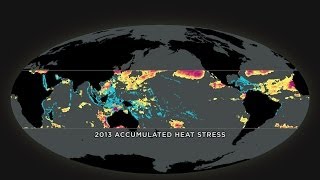
Science Bulletins: Warm Forecast for Coral Reefs
Watch how satellites monitor the risks posed to coral reefs by ocean warming, and see where reefs might be more resilient to change in the coming decades.
American Museum of Natural History
Science Bulletins: Super Corals—A Closer Look (2 of 3)
Marine biologists in Hawaii investigate so-called “super corals,” which thrive even as ocean temperatures rise. In A Closer Look, powerful microscopic imaging ...
American Museum of Natural History
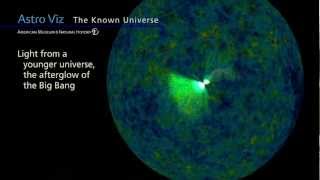
Science Bulletins: The Known Universe
The Known Universe takes viewers from the Himalayas through our atmosphere and the inky black of space to the afterglow of the Big Bang. It is a short flight ...
American Museum of Natural History
Science Bulletins: Caving for Cures - Mining Drugs From Nature
Brian Bachmann, an assistant professor of chemistry at Vanderbilt University, has combined his interest in natural products drug production with his hobby of ...
American Museum of Natural History
Science Bulletins: Sunken Remains Illuminate Native American Lineage
In an underwater cave in the Yucatán, divers discovered a near-complete human skeleton dating to the first wave of migration to North America. DNA evidence ...
American Museum of Natural History
Science Bulletins: Monitoring Mount Etna—Magma on the Move
Scientists in Sicily are collecting an enormous amount of data to monitor moving magma inside Mt. Etna, one of the most active volcanoes in the world. Nearly a ...
American Museum of Natural History
Science Bulletins: Sharks—the Present (1 of 2)
Marine biologists in South Carolina head out on the water to catch and tag sharks, and to collect genetic samples that will be analyzed back in the lab.
American Museum of Natural History
Science Bulletins: WISE to Scan the Infrared Sky
NASA's latest space telescope-the Wide Field Infrared Explorer, or WISE-recently took its first images of the sky around Earth in infrared light. In its initial ...
American Museum of Natural History
Science Bulletins: Bee Deaths Linked to Common Pesticides
Several recent studies have questioned whether exposure to common pesticides might be impairing bee performance and contributing to the observed ...
American Museum of Natural History
Science Bulletins: New Horizons Brings Pluto Into Focus
Tiny, faraway Pluto was first spied in 1930. This icy world is one of thousands of rocky bodies that make up the Kuiper Belt, a ring that circles our solar system ...
American Museum of Natural History
Science Bulletins: Mapping Microbes in the Human Body
The Human Microbiome Project, an initiative of the National Institutes of Health, is cataloguing trillions of microbes that live within the human body. Researchers ...
American Museum of Natural History
Science Bulletins: Tracing the First Americans
When and where did humans first enter the Americas—and what routes did they travel to colonize the continents? These are big questions for scientists studying ...
American Museum of Natural History
Science Bulletins: Reading the Rocks—The Search for Oil in ANWR
In 1980 an act of Congress set aside nearly 20 million acres of Alaska's North Slope tundra to create the Arctic National Wildlife Refuge (ANWR). Less than 100 ...
American Museum of Natural History
Science Bulletins: Super Corals—Understanding the Science (3 of 3)
Marine biologists in Hawaii investigate so-called “super corals,” which thrive even as ocean temperatures rise. In Understanding the Science, watch scientists in ...
American Museum of Natural History
Science Bulletins: Geologists on Mars
In March 2004, two NASA explorers discovered firm evidence that water once flowed on Mars—perhaps enough water to harbor life. Science Bulletins is a ...
American Museum of Natural History
Science Bulletins: Beyond Our Solar System—Searching for Extrasolar Planets
Astrophysicists are discovering new extrasolar planets—those outside our Solar System—almost daily. NASA's Spitzer Space Telescope (originally called SIRTF ...
American Museum of Natural History
Science Bulletins: Introducing the Denisovans
New research led by scientists at Germany's Max Planck Institute for Evolutionary Anthropology confirms that a 40000-year-old finger bone and tooth belong to a ...
American Museum of Natural History
Science Bulletins: Protecting Wildlife in a Changing Climate
As the global climate changes, wild animals are shifting where they live—even beyond the protected areas that are crucial to their survival. This visualization ...
American Museum of Natural History
Science Bulletins: Archived in Ice—Rescuing the Climate Record
Follow scientist-adventurer Lonnie Thompson to the 5670-meter-high Quelccaya ice cap in the Peruvian Andes. Thompson and his team from Ohio State ...
American Museum of Natural History
Science Bulletins: SOFIA—Stars and the Space Between
By sending an infrared telescope to altitudes of 12000 meters (40000 feet) and higher, NASA and the German Aerospace Center (DLR) conduct astronomical ...
American Museum of Natural History
Science Bulletins: The Rise of Fire
Wildfires, whether ignited by lightning or people, show global patterns that are visible to satellites. In the United States, fire is increasing: on average, millions ...
American Museum of Natural History
Science Bulletins: Thinking in Symbols
Modern human culture underwent a "creative explosion" in Ice Age Europe 40000 to 10000 years ago. The evidence, which ranges from fantastic cave paintings ...
American Museum of Natural History
Science Bulletins: The Rise of Oxygen
Follow geologists as they hunt for, pickaxe, and test rock samples from the 2.5 billion year old Huronian Supergroup, a sedimentary formation in Ontario, Canada ...
American Museum of Natural History
Science Bulletins: Scientists Save Penguin Chicks
African penguins are critically endangered, their colonies reduced by 70 percent in the last decade. Commercial fishing is to blame, emptying the penguins' ...
American Museum of Natural History
Science Bulletins: MRSA—When Good Bacteria Go Bad
The bacteria Staphylococcus aureus is a benign resident of the human microbiome. But in the last 15 years, a strain of it has evolved to become a major public ...
American Museum of Natural History
Science Bulletins: Water Underground
Texas endured its driest year ever in 2011, and southern Alabama and Georgia have continued to suffer serious drought in 2012. Climate change is predicted to ...
American Museum of Natural History
Science Bulletins: The Cosmic Microwave Background—A New View from the South Pole
The icy South Pole desert is a harsh and desolate landscape in which few life-forms can flourish. But the extreme cold and isolation are perfect for astronomical ...
American Museum of Natural History
Science Bulletins: Deep-Sea Cephalopods Hide Using Light
Many kinds of octopus, cuttlefish, and squid are masters of disguise. They conceal themselves using chromatophores—specialized skin cells that hold pigment ...
American Museum of Natural History
Lee Kong Chian Natural History Museum celebrates fifth anniversary
The Lee Kong Chian Natural History Museum at the National University of Singapore turns five in 2020 and will be holding a series of e-events from Sep 5 to ...
CNA
Science Bulletins: Hubble Space Telescope—25 Years and Counting
Few of NASA's telescopes have captured the public imagination like Hubble, with its spectacular views of distant galaxies, supernovas, and nebulas. The first ...
American Museum of Natural History
Science Bulletins: New Fossils Recast Tyrannosaur Evolution
Fossils of two never-before-seen species of tyrannosaur are overturning long-held ideas about the diversity and evolution of this family of dinosaurs. One is an ...
American Museum of Natural History