Science Bulletins: Sharks—the Present (1 of 2)
Marine biologists in South Carolina head out on the water to catch and tag sharks, and to collect genetic samples that will be ...
American Museum of Natural History
Science Bulletins: Roads Influence Animal Genes
Roads connect people, but they separate animals.
American Museum of Natural History
Science Bulletins: Seeking Spiders—Biodiversity on a Different Scale
Recognizing the tiny species of any ecosystem is hugely important for defining its overall diversity. But miniscule forms of life are ...
American Museum of Natural History
Science Bulletins: New Frog on the Block
A new species of frog recently announced itself to scientists studying amphibians in the area surrounding New York City.
American Museum of Natural History
Science Bulletins: Sharks—the Past (2 of 2)
Scientists use CT scanning technology to compare living and fossil sharks. Over their 450 million-year evolutionary history, sharks ...
American Museum of Natural History
Science Bulletins: Sea Creatures Face the Acid Test
An AMNH scientist digs into the fossil record to discover why ammonites, a highly successful group of mollusks, perished after an ...
American Museum of Natural History
Science Bulletins: Keeling's Curve – The Story of CO2
As the leading greenhouse gas, carbon dioxide is one of the atmosphere's most closely watched ingredients. The scrutiny began ...
American Museum of Natural History
Science Bulletins: Tracing the First Americans
When and where did humans first enter the Americas—and what routes did they travel to colonize the continents? These are big ...
American Museum of Natural History
Science Bulletins: Our Ancient Relatives Born with Flexible Skulls
A new study of the skull of an early hominin child provides a better understanding of the evolutionary timeline for modern human ...
American Museum of Natural History
Science Bulletins: Invasive Species
It's war in many ecosystems around the world as invasive and native species battle for primacy. Facing the increased exchange of ...
American Museum of Natural History
Science Bulletins: The Ecology of Climate Change
The boreal forest, which stretches across northern latitudes just south of the Arctic Circle, is a key region for studying climate ...
American Museum of Natural History
Science Bulletins: Our Moon
The peaceful glow of the moonlight in our sky belies a violent history. Evidence suggests that the Moon formed when a Mars-sized ...
American Museum of Natural History
Science Bulletins: Jellies Down Deep
This Bio Bulletin, which features spectacular underwater footage, follows scientists at the Monterey Bay Aquarium Research ...
American Museum of Natural History
Science Bulletins: On the Hunt for a Balanced Diet
Biologists had long assumed that predators were more concerned with the quantity of their food than the quality, but a recent study ...
American Museum of Natural History
Science Bulletins: Learning from Lyme
Since its discovery in 1975, Lyme disease has become one of the most commonly reported diseases transmitted by insects, ...
American Museum of Natural History
Science Bulletins: Yellowstone—Monitoring the Fire Below
Three of the most catastrophic volcanic eruptions in geologic history occurred at a place now visited by nearly four million people ...
American Museum of Natural History
Science Bulletins: Introducing the Denisovans
New research led by scientists at Germany's Max Planck Institute for Evolutionary Anthropology confirms that a 40000-year-old ...
American Museum of Natural History
Science Bulletins: Moving Mountains
One paradox of geology is that weathering a mountain down can actually make it rise higher. Scientists have learned of this ...
American Museum of Natural History
Science Bulletins: Brain Evolution—The Sweet Smell of Success
A good sense of smell may have contributed to the development of certain kinds of social functions in Homo sapiens, according to ...
American Museum of Natural History
Science Bulletins: How Successful Is Wildlife Conservation?
How much do habitat protection, anti-trafficking laws, reintroductions, and other conservation efforts help save Earth's threatened ...
American Museum of Natural History
Science Bulletins: Toxic Sludge Caught on Satellite
In what may have been the most devastating ecological disaster in Hungary's history, on October 4, 2010, a river of red sludge ...
American Museum of Natural History
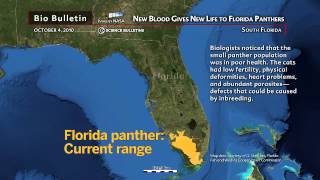
Science Bulletins: New Blood Gives New Life to Florida Panthers
Endangered Florida panthers benefited from the introduction of Texan pumas in their ranks.
American Museum of Natural History
Science Bulletins: Shrinking Glaciers—A Chronology of Climate Change
Analysis of Earth's geologic record can reveal how the climate has changed over time. Scientists in New Zealand are examining ...
American Museum of Natural History
Science Bulletins: New Fossils Recast Tyrannosaur Evolution
Fossils of two never-before-seen species of tyrannosaur are overturning long-held ideas about the diversity and evolution of this ...
American Museum of Natural History
Science Bulletins: Underwater Microscope Zooms in on Tiny Marine Life
Most plankton are too small to be seen with the naked eye. But despite their size, they are vital in marine and freshwater ...
American Museum of Natural History
Science Bulletins: Record- Breaking Fire Season
The southeastern United States is now in its worst drought in over a century. Lack of rain has exacerbated forest fires across the ...
American Museum of Natural History
Science Bulletins: Eight New "Natural Wonders" Listed
In July, the United Nations Educational, Scientific, and Cultural Organization (UNESCO) added eight new natural sites to its World ...
American Museum of Natural History
Science Bulletins: Decoding the DNA of Extinct Species
Caves were important refuges for humans and animals that coexisted during the late Pleistocene, the epoch of ice ages that ...
American Museum of Natural History
Science Bulletins: PETM - Unearthing Ancient Climate Change
Fifty-five million years ago, a sudden, enormous influx of carbon flooded the ocean and atmosphere for reasons that are still ...
American Museum of Natural History
Science Bulletins: Orangutan Genome Finished
A team of more than a hundred researchers has sequenced all the genes of the orangutan, the third closest living relative of ...
American Museum of Natural History
Science Bulletins: Suburban Growth Stresses Streams
Ecologists have established a long-term study of streams that flow through urban, suburban, rural, and forested areas of western ...
American Museum of Natural History
Science Bulletins: Early Migration for Modern Humans
When did modern humans make their first appearance in Europe? A jawbone excavated in England and two molars found in ...
American Museum of Natural History
Yoga enthusiasts participate in yoga session at National Museum of Natural History
Yoga enthusiasts participate in the second of four yoga sessions entitled Bunyi (the feeling of great joy) conducted by the National ...
Manila Bulletin Online
Science Bulletins: More Roads Encourage Wildlife Poaching
A sweeping satellite analysis by researchers at the Woods Hole Research Center shows that roads have expanded more than ...
American Museum of Natural History
Science Bulletins: SpaceX Dragon Succeeds in Historic Mission
SpaceX achieved a milestone in space travel last month, becoming the first private company in the United States to successfully ...
American Museum of Natural History
Science Bulletins: Twitter Tracks Cholera Spread in Haiti
In the early stages of an epidemic, access to information about emerging cases is critical for health care workers trying to control ...
American Museum of Natural History
National Museum for Natural History officially opens today
The National Museum for Natural History officially opens today to the public! Here's a sneak peek.
Manila Bulletin Online
Lee Kong Chian Natural History Museum - Museum for the Future
The Lee Kong Chian Natural History Museum at the National University of Singapore strives to be a leader in Southeast Asian ...
Lee Kong Chian Natural History Museum
Science Bulletins: Gamma-Ray Bursts—Flashes in the Sky
Gamma-ray bursts—flashes of intense radiation in space that are often just seconds long—were accidentally discovered in the ...
American Museum of Natural History
Science Bulletins: New Evidence of Water on Asteroids
For the first time, researchers have detected water on an asteroid. Two research teams independently determined that the 24 ...
American Museum of Natural History
The Attenborough - Fortey talk What's in a name? | Natural History Museum
Join Sir David Attenborough and Richard Fortey.
Natural History Museum
Science Bulletins Data Visualization Webinar: Protecting Wildlife in a Changing Climate
As climate change alters habitats on Earth, some species are shifting their ranges. Protecting sensitive species means planning ...
American Museum of Natural History