Science Bulletins: Cloning and Conservation
On January 8, 2001, a healthy baby gaur—a large ox-like animal whose populations are now threatened throughout much of their native range from India to ...
American Museum of Natural History
Science Bulletins: Zircons—Time Capsules from the Early Earth
Zircons are tiny crystals with a big story to tell. Some of these minerals are the oldest Earth materials ever discovered, and therefore yield clues about what the ...
American Museum of Natural History
Lee Kong Chian Natural History Museum celebrates fifth anniversary
The Lee Kong Chian Natural History Museum at the National University of Singapore turns five in 2020 and will be holding a series of e-events from Sep 5 to ...
CNA
Science Bulletins: Decoding the DNA of Extinct Species
Caves were important refuges for humans and animals that coexisted during the late Pleistocene, the epoch of ice ages that ended 10000 years ago.
American Museum of Natural History
Science Bulletins: Super- Star of the Universe
A local star is the most massive ever detected.
American Museum of Natural History
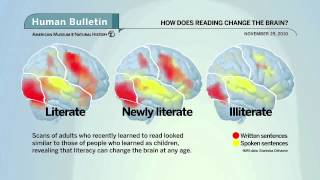
Science Bulletins: How Does Reading Change the Brain?
A recent study led by neuroscientists at France's National Institute of Health and Medical Research has found that learning to read—no matter at what ...
American Museum of Natural History
Science Bulletins: Our Ancient Relatives Born with Flexible Skulls
A new study of the skull of an early hominin child provides a better understanding of the evolutionary timeline for modern human skulls-and brains. The skulls of ...
American Museum of Natural History
Science Bulletins: Early Human Walked Upright
Since a few 6-million-year-old bones of the species Orrorin tugenesis were discovered in Kenya in 2000, scientists have not been certain that Orrorin could walk ...
American Museum of Natural History
Science Bulletins: Making Fossils Hear
When did human beings first develop the ability to speak? This remains one of the most exciting and perplexing questions for researchers of human evolution ...
American Museum of Natural History
Science Bulletins: New Evidence of Water on Asteroids
For the first time, researchers have detected water on an asteroid. Two research teams independently determined that the 24 Themis asteroid, which orbits ...
American Museum of Natural History
Science Bulletins: In Search of Wild Variety
To help build the catalog of life, biologists at AMNH search the globe for species that have never been scientifically described. Discover seven of these new ...
American Museum of Natural History
Science Bulletins: Skull fills Gap in Fossil Record
Some periods of human prehistory lack a substantial fossil record in key geographic locations, making it difficult to confirm genetic evidence of modern human ...
American Museum of Natural History
FAQ: Les spinosaures
Interview du Dr. Christophe Hendrickx, paléontologue spécialiste des dinosaures théropodes, qui nous parle des Spinosauridés. L'actualité scientifique sur ...
Entracte Science
Science Bulletins: Unraveling the Origins of the Flores Fossils
Since the diminutive hominid fossils—the so-called "hobbits"—were discovered on the Indonesian island of Flores in 2003, scientists have debated where to ...
American Museum of Natural History
Science Bulletins: Making Medicine from Nature
Three cutting-edge medical technologies inspired by biodiversity. This Bio Bulletin snapshot is third in a series to celebrate the 2010 International Year of ...
American Museum of Natural History
Science Bulletins: Gene Patterns Point to Long Lives
To better understand the biology of healthy aging, the Boston University School of Medicine is studying a unique population of Americans—centenarians, ...
American Museum of Natural History
Science Bulletins: Genes and Geography—They Go Together
Scientists can now analyze a person's genes to pinpoint what country his or her ancestors hailed from. A team of U.S. researchers recently performed a massive ...
American Museum of Natural History
Nature's Fury: Yellowstone - Monitoring the Fire Below
The magma chamber responsible for Yellowstone's past volcanic activity still lies beneath, and continues to steam, heat, and shift the park landscape.
American Museum of Natural History
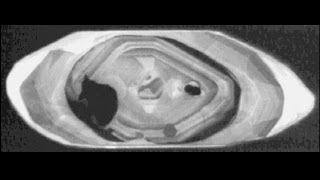
Science Bulletins: An Odd Ellipse
A new Hubble Space Telescope image shows a galaxy with a complex identity.
American Museum of Natural History
Fun Little Secrets in Animal Crossing: New Horizons
They're largely useless but certainly fun. Lovely Boundary Break gubbins: https://www.youtube.com/channel/UCHTnEwQKNwm49CQeCVZogMw Zion's ...
Nintendo Life
Science Bulletins: Supernovas Step by Step
Scientists are reproducing supernova explosions on computer screens.
American Museum of Natural History
How Dragons Conquered the World | Monstrum
Don't miss future episodes of Monstrum, subscribe! http://bit.ly/pbsstoried_sub Dragons are one of the most prolific monsters, conquering global mythology ...
Storied
Lecture: Exploring Science Through Art
Art is essential to increasing scientific knowledge and inspiring conservation. This lecture from Andrea Dingeldein, a local artist and educator featured in the ...
Santa Cruz Museum of Natural History
Science Bulletins: "Body Clock" Found in Bone
Many body processes operate in rhythms, often called "biological clocks." A team of researchers led by Timothy Bromage at the New York University College of ...
American Museum of Natural History
Science Bulletins: Human Stems Cell Breakthrough
A long-sought milestone has been reached in stem cell research: transforming adult cells directly into stem cells without having to use an embryo as a vehicle.
American Museum of Natural History
Science Bulletins: Stem Cell Advance Study of Lou Gehrig's Disease
Lou Gehrig's disease, or amyotrophic lateral sclerosis (ALS), has no cure. It causes motor neurons in the central nervous system to shrink, resulting in severe ...
American Museum of Natural History
Science Bulletins: Hubble Tracks the Seasons of Pluto
NASA recently released images of Pluto taken by the Hubble Space Telescope in 2002 and 2003. When compared to images from 1994, the new images show ...
American Museum of Natural History
Science Bulletins: Making Faces for Survival
Ask any person, from any country‚ to make a fearful face and you'll get the same response-eyebrows raised, eyes wide open, flared nostrils. A disgusted face, on ...
American Museum of Natural History
Science Bulletins: Neanderthal Genome Sheds Light on Humanity
Neanderthals were our closest relatives. These stocky, heavy-browed humans lived from about 200000 to 30000 years ago in Eurasia and the Middle East.
American Museum of Natural History
Science Bulletins: Fuller Gene Map May Help Disease Study
Scientists have released the largest survey yet of human genetic variation.
American Museum of Natural History
Science Bulletins: Jazz on the Brain
"Jazz is absolutely defined by improvisation," says Charles Limb, who is both a jazz saxophonist and a researcher at Johns Hopkins University and the National ...
American Museum of Natural History
Science Bulletins: Brain Control of the Grasping Hand
Many primates, notably humans, have fine motor skills that permit grasping and manipulation of small objects, essential adaptations for tool use. Curiously, the ...
American Museum of Natural History
Science Bulletins: Planck and Herschel: The Sky at Two Scales
Planck and Herschel, a pair of satellites launched in 2009, are examining the sky in tandem to solve some of our biggest cosmological mysteries.
American Museum of Natural History
Science Bulletins: Ancient "Kitchen" Reveals Modern Hunting Skills
How early humans hunted and ate their food can be a gauge of cognitive ability. It takes more strategic planning to capture large, healthy, adult game, transport it ...
American Museum of Natural History
Science Bulletins: Amazon People Offer Clues to Heart Health
A long-term study of the Tsimane, a traditional community that lives in the Bolivian Amazon, is offering scientists a new perspective on the risks of heart disease.
American Museum of Natural History
REAL: El REGISTRO FÓSIL demuestra la EVOLUCIÓN
En pleno siglo XXI todavía hay quienes eligen creer que la evolución es falsa a pesar de las múltiples evidencias que la apoyan. Hay quien dice que el registro ...
El Pakozoico
Science Bulletins: New Malaria Map
The international Malaria Atlas Project has created the most complete map of malaria risk in four decades. The team analyzed 4278 surveys of malaria infection ...
American Museum of Natural History
Science Bulletins: Swine Flu: Seeking Genetic Clues
Scientists are quickly sequencing the genes of the swine flu virus, officially called influenza A H1N1, from thousands of patients around the world.
American Museum of Natural History
Science Bulletins: Blocking Malaria from the Blood
To fuel new malaria drugs, scientists are studying how malaria parasites gain access to red blood cells. Australian researchers recently discovered a surface ...
American Museum of Natural History
Science Bulletins: SpaceX Dragon Succeeds in Historic Mission
SpaceX achieved a milestone in space travel last month, becoming the first private company in the United States to successfully launch a cargo capsule, attach it ...
American Museum of Natural History
Science Bulletins: Decoding Human Ancestry
As technology improves, allowing the quick sequencing of large quantities of DNA, researchers are increasingly organizing massive studies to collect and ...
American Museum of Natural History
The Most Embarrassing Archaeological Blunders
Check my other channel Geographics: https://www.youtube.com/channel/UCHKRfxkMTqiiv4pF99qGKIw →Subscribe for new videos every day!
TopTenz