The First Practical Guide to Price Level Stabilization: Confidential Reports to the Riksbank in 1931
Thursday, April 25, 2024 Hoover Institution | Stanford University Lars Jonung, senior professor at Lund University, Sweden ...
Hoover Institution
How an obsession with home ownership can ruin the economy
Many dream of owning their own home, and thanks to huge financial incentives in the rich world many have been able to so.
The Economist
Who made millions from the attack on Israel?
In the days before the October 7th attack short selling of Israeli stocks spiked in New York, making someone a lot of money.
The Economist
Behind 'Tarjay:' Target’s Strategy Combines Bargain and ‘Elevated’ Products | WSJ The Economics Of
About 75% of the U.S. population can find a Target store within a 10 mile radius. WSJ's Sarah Nassauer explains how the retailer ...
The Wall Street Journal
Why is Argentina’s economy such a mess?
Rampant inflation, a booming black market for US dollars and crippling debt - welcome to Argentina, one of the world's most ...
The Economist
How AI is generating a revolution in entertainment
A new wave of artificial intelligence is starting to transform the way the entertainment industry operates. Who will be the winners ...
The Economist
Is AI the future of movie-making?
What if text prompts enabled anyone to make a blockbuster movie, or even an entire box-set's worth of TV? That is the promise of ...
The Economist
Why Aldi Is America’s Fastest Growing Grocery Store | WSJ The Economics Of
Aldi's 'no-frills' strategy has helped make it one of the cheapest and the fastest growing grocery stores in the U.S. For the past ...
The Wall Street Journal
Why is there still poverty in America?
In America almost 40m people—one eighth of its population—live in poverty. Why does the richest big country in the world still ...
The Economist
China’s economy: what’s its weak spot?
The number of working-age people in China is shrinking. Could this threaten the country's rise as an economic superpower?
The Economist
Why oligarchs choose London for their dirty money
Britain is one of the best places in the world to launder dirty money. Our new film tells you why—and asks whether that's likely to ...
The Economist
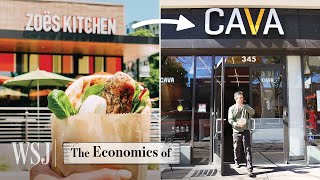
How Consuming a Competitor Fueled Cava’s Rapid Growth | WSJ The Economics Of
Cava has quickly grown to about 300 locations through an acquisition of another Mediterranean fast-casual restaurant chain, ...
The Wall Street Journal
How green is the energy revolution really?
We hear a lot about the need to get off fossil fuels. How is the energy transition really going and how fast is the world moving ...
The Economist
How Africa could one day rival China
Africa is changing so fast, it is becoming hard to ignore. In the short term the continent faces many problems, including covid-19, ...
The Economist
Sam Altman: there’s no “magic red button” to stop AI
Sam Altman, CEO of OpenAI, and Satya Nadella, CEO of Microsoft, speak to The Economist's editor-in-chief, Zanny Minton ...
The Economist
Could digital currencies put banks out of business?
Cryptocurrencies like Bitcoin have been billed as a major disruptor to finance. But digital currencies issued by governments might ...
The Economist
How to manage a megacity
By 2050, 6 billion people could be living in cities. How should the challenges caused by rapid urbanization be handled in the ...
The Economist
Indonesia’s election: who is Prabowo Subianto?
Prabowo Subianto, the frontrunner in Indonesia's election, hides a dark past. He has been accused of war crimes, overseeing the ...
The Economist
Domino’s Pizza Empire Was Built on Delivery. Now, That May Not Be Enough | WSJ The Economics Of
Domino's dominates U.S. pizza sales, thanks in part to its innovations in delivery. But now, a shortage of delivery drivers is ...
The Wall Street Journal
What happens to your brain as you age
As the most complex organ in your body, your brain changes radically throughout your life. Starting from before birth and ...
The Economist
Ekonomist 2024 Kapağındaki Gizemler!
Ekonomist 2024 dergi kapağı geçtiğimiz günlerde yayınlandı ve kapakta yine bir çok görsel gösterilmiş. Zelinski ve Putinden Joe ...
NYGMA
Which countries get the best night's sleep?
Sleep patterns differ across the world. From early-to-bed South Africans to Russians who hit the sack around midnight, we reveal ...
The Economist
The true costs of ageing
The rich world is ageing fast. How can societies afford the looming costs of caring for their growing elderly populations? film ...
The Economist
Why is crypto like a cockroach?
It's really hard to kill cockroaches. Stamping on them, chopping off their head and even flushing them down the toilet won't work.
The Economist
What does a cashless future mean?
Many countries are going cashless at great speed. What are the advantages of ditching hard cash and what are the dangers?
The Economist
Планы иллюминатов на 2024 год: что скрывает обложка нового журнала The Economist #theeconomist
Ежегодно в середине ноября британский журнал The Economist представляет миру обложку с трендами на наступающий ...
StarLife TV
Why Dunkin’ Donuts Is Now Just Dunkin’ | WSJ The Economics Of
Dunkin' started out as a small doughnut-and-coffee shop in Massachusetts in 1948 and has grown to over 12000 stores in 40 ...
The Wall Street Journal
Why you have an accent in a foreign language
Ever wondered why it's so hard to sound like a local when you go on holiday? Discover the pronunciation tips your teachers may ...
The Economist
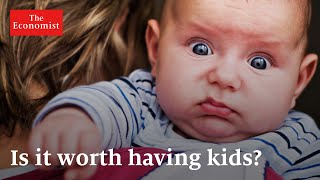
Is it worth having kids?
Fertility rates are falling across the rich world, as more and more people are weighing up whether to have children. Raising them ...
The Economist
Why Marriott, Hilton and Hyatt Don’t Actually Own Most of Their Hotels | WSJ The Economics Of
When guests stay at a hotel chain like Marriott, Hilton or Hyatt, these companies don't typically own the property. They may not ...
The Wall Street Journal
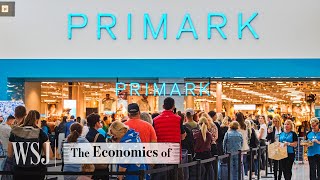
Why Primark Is Thriving While Retailers Like Forever 21 Are Closing | WSJ The Economics Of
Primark is increasing its revenue by encouraging customers to shop in retail stores as the e-commerce industry booms.
The Wall Street Journal
Is it worth going to university?
These days higher education can feel like a risky investment. Here are The Economist's tips on how to make your degree worth ...
The Economist
Is nuclear fusion the future of clean energy?
Fusion is a kind of nuclear power, which could revolutionise how clean energy is produced. As a new wave of experiments heats ...
The Economist
The best place to be a woman?
In the battle for gender equality Iceland is leading the world. The tiny island is pioneering news ways to close the gender pay gap, ...
The Economist
What is consciousness?
Understanding what consciousness is, and why and how it evolved, is perhaps the greatest mystery known to science. Click here ...
The Economist
Hydrogen: fuel of the future?
It's been hailed as fuel of the future. Hydrogen is clean, flexible and energy efficient. But in practice there are huge hurdles to ...
The Economist
Why Belgium is now the cocaine capital of Europe
With record seizures of cocaine at Belgian ports, the country has become Europe's cocaine-trafficking capital. As the flow of drugs ...
The Economist
Israeli-Palestinian conflict: Is there a path to peace?
Things look bleak in the Middle East after Binyamin Netanyahu scorned America's push for an end to the fighting. But in private ...
The Economist
How modern families increase social inequality
Modern families with two working adults are richer than those with a single breadwinner, and can afford to take a different ...
The Economist
America v China: why the trade war won't end soon
America and China are edging closer to signing a deal in the trade war. But that won't mark the end—the issues at the heart of the ...
The Economist
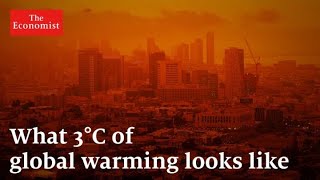
See what three degrees of global warming looks like
If global temperatures rise three degrees Celsius above pre-industrial levels, the results would be catastrophic. It's an entirely ...
The Economist
Why are women paid less than men?
The gender pay gap is not caused by women earning less than men for the same job. It is largely because women choose ...
The Economist