Science Bulletins: On Shaky Ground—Building a Safer Future in Haiti
In November 2010, ten months after a magnitude 7.0 earthquake flattened huge sections of Port-au-Prince, Haiti, a team of geologists commissioned by the ...
American Museum of Natural History
Science Bulletins: The Cosmic Microwave Background—A New View from the South Pole
The icy South Pole desert is a harsh and desolate landscape in which few life-forms can flourish. But the extreme cold and isolation are perfect for astronomical ...
American Museum of Natural History
Science Bulletins: Exploring a Star’s Death in 3D
Cassiopeia A is the gas cloud left behind after a star exploded, first glimpsed on Earth about 325 years ago. Its youth and proximity to us make it one of the ...
American Museum of Natural History
Science Bulletins: Impact! Tracking Near-Earth Asteroids
Collisions between space objects are a vital part of the evolution of our Solar System. Most of Earth's impact craters have been wiped away due to plate tectonics ...
American Museum of Natural History
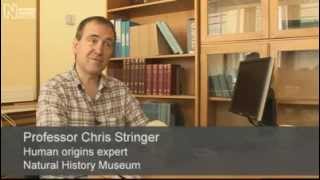
What did Neanderthals eat? | Natural History Museum
Natural History Museum scientists, working as part of the Gibraltar Caves Project, excavated and studied remains of shell fish and other marine animals such as ...
Natural History Museum
Science Bulletins: Guinea Worm—Countdown to Zero
Guinea worm, a painful parasite that once affected millions of people each year, may soon be relegated to the past. Thanks to improved health education and ...
American Museum of Natural History
Science Bulletins: SALT—Imaging the Southern Sky
When South Africa decided to build a new telescope, it went big. As in rival-the-world's-best big. With the participation of astronomy groups from all over the ...
American Museum of Natural History
Science Bulletins: Wild at Heart—The Plight of Elephants in Thailand
Elephants in Thailand have a big unemployment problem. Long a revered creature in traditional Asian cultures and a critical beast of burden for Asian ...
American Museum of Natural History
Science Bulletins: Curiosity Rover Heads for Mars
The biggest and most technically advanced rover to date is on its way to Mars. In the latest Astro Bulletin from the Museum's Science Bulletins program, follow ...
American Museum of Natural History
Science Bulletins: Hubble Space Telescope—25 Years and Counting
Few of NASA's telescopes have captured the public imagination like Hubble, with its spectacular views of distant galaxies, supernovas, and nebulas. The first ...
American Museum of Natural History
Science Bulletins: Habitat Corridors Benefit Isolated Plants
In many open habitats, more than one-third of seeds are wind-dispersed. For isolated patches of plants, the interaction of wind with the landscape can determine ...
American Museum of Natural History
Walking with Arachnids in the Natural History Museum's Spider Pavilion
Every spring the Natural History Museum of Los Angeles County opens up their pavilion, letting you walk through a spectacular environment of butterflies.
KCET
Science Bulletins: NAO—Driving Climate Across the Atlantic
For centuries, a massive atmospheric system has regularly altered weather patterns, fishery production and animal migrations across the North Atlantic Ocean.
American Museum of Natural History