Science Bulletins: Deadly Larvae Lure Predators
Amphibians that try to feed on the larvae of the Epomis beetle will find that they've bitten off more than they can chew. Rather than avoiding its predators, the ...
American Museum of Natural History
Science Bulletins: Impact! Tracking Near-Earth Asteroids
Collisions between space objects are a vital part of the evolution of our Solar System. Most of Earth's impact craters have been wiped away due to plate tectonics ...
American Museum of Natural History
Science Bulletins: Autistic Brains Show Visual Dominance
After examining brain-mapping studies of hundreds of autistic people, scientists from the University of Montreal in Canada and Massachusetts General Hospital ...
American Museum of Natural History
Science Bulletins: Mapping Microbes in the Human Body
The Human Microbiome Project, an initiative of the National Institutes of Health, is cataloguing trillions of microbes that live within the human body. Researchers ...
American Museum of Natural History
Science Bulletins: Curiosity Rover Heads for Mars
The biggest and most technically advanced rover to date is on its way to Mars. In the latest Astro Bulletin from the Museum's Science Bulletins program, follow ...
American Museum of Natural History
Science Bulletins: Hubble Space Telescope—25 Years and Counting
Few of NASA's telescopes have captured the public imagination like Hubble, with its spectacular views of distant galaxies, supernovas, and nebulas. The first ...
American Museum of Natural History
Science Bulletins: Language in the Brain
Why is it that humans can speak but chimpanzees, our closest living relatives, cannot? The human brain is uniquely wired to produce language. Untangling this ...
American Museum of Natural History
Science Bulletins: Interferometry—Sizing Up the Stars
If technology, cost, and terrain permitted, scientists seeking key data on stars in our galaxy would have loved to construct a behemoth 330 m wide telescope atop ...
American Museum of Natural History
Science Bulletins: Suburban Growth Stresses Streams
Ecologists have established a long-term study of streams that flow through urban, suburban, rural, and forested areas of western North Carolina. Their goal is to ...
American Museum of Natural History
Science Bulletins: Expedition Rusinga—Uncovering Our Adaptive Origins
On Rusinga Island in Kenya's Lake Victoria, paleontologist Will Harcourt-Smith is leading an effort to recreate the environments inhabited by primitive ...
American Museum of Natural History
Science Bulletins: The Invasion: A Case Study on the Hudson River
Synopsis The zebra mussel, a notorious invasive species, has been silently infesting the rocky bottom of the Hudson River since it arrived there in 1991.
American Museum of Natural History
Science Bulletins: New Horizons Brings Pluto Into Focus
Tiny, faraway Pluto was first spied in 1930. This icy world is one of thousands of rocky bodies that make up the Kuiper Belt, a ring that circles our solar system ...
American Museum of Natural History
Science Bulletins: Protecting Wildlife in a Changing Climate
As the global climate changes, wild animals are shifting where they live—even beyond the protected areas that are crucial to their survival. This visualization ...
American Museum of Natural History
Science Bulletins: Introducing the Denisovans
New research led by scientists at Germany's Max Planck Institute for Evolutionary Anthropology confirms that a 40000-year-old finger bone and tooth belong to a ...
American Museum of Natural History
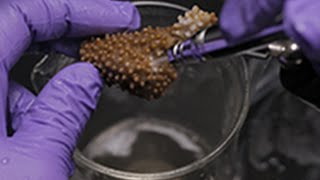
Science Bulletins: Super Corals—Understanding the Science (3 of 3)
Marine biologists in Hawaii investigate so-called “super corals,” which thrive even as ocean temperatures rise. In Understanding the Science, watch scientists in ...
American Museum of Natural History
Science Bulletins: On the Hunt for a Balanced Diet
Biologists had long assumed that predators were more concerned with the quantity of their food than the quality, but a recent study shows that nutritional value ...
American Museum of Natural History
Science Bulletins: Lake Mead: Empty by 2021?
Scientists from the Scripps Institution of Oceanography have analyzed the current and predicted "water budget"—the amount of water going in and coming ...
American Museum of Natural History
Science Bulletins: Jellies Down Deep
This Bio Bulletin, which features spectacular underwater footage, follows scientists at the Monterey Bay Aquarium Research Institute as they retrieve jellies from ...
American Museum of Natural History
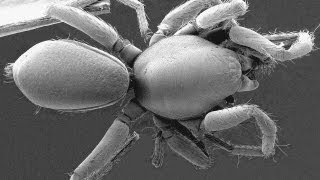
Science Bulletins: Seeking Spiders—Biodiversity on a Different Scale
Recognizing the tiny species of any ecosystem is hugely important for defining its overall diversity. But miniscule forms of life are often invisible to conservation ...
American Museum of Natural History
Science Bulletins: Deciphering History's Deadliest Pandemic
The unusual severity of 1918's "Spanish flu" pandemic has eluded explanation for nearly a century. Unlike typical flu epidemics, most of the victims in 1918 were ...
American Museum of Natural History
Science Bulletins: SOFIA—Stars and the Space Between
By sending an infrared telescope to altitudes of 12000 meters (40000 feet) and higher, NASA and the German Aerospace Center (DLR) conduct astronomical ...
American Museum of Natural History
Science Bulletins: Sunken Remains Illuminate Native American Lineage
In an underwater cave in the Yucatán, divers discovered a near-complete human skeleton dating to the first wave of migration to North America. DNA evidence ...
American Museum of Natural History
Science Bulletins: Water Underground
Texas endured its driest year ever in 2011, and southern Alabama and Georgia have continued to suffer serious drought in 2012. Climate change is predicted to ...
American Museum of Natural History
Science Bulletins: WISE to Scan the Infrared Sky
NASA's latest space telescope-the Wide Field Infrared Explorer, or WISE-recently took its first images of the sky around Earth in infrared light. In its initial ...
American Museum of Natural History
Science Bulletins: Down and Dirty Biodiversity
The soils in tundra, grasslands, tropical forests are very different, but they have one thing in common; they all host an astounding diversity of life. Inhabiting these ...
American Museum of Natural History
Science Bulletins: Phobos—A Groovy Moon
Phobos, a moon of Mars, is streaked with shallow grooves. Scientists long thought the grooves were caused by meteor impacts. But new computer modeling ...
American Museum of Natural History
Science Bulletins: Habitat Corridors Benefit Isolated Plants
In many open habitats, more than one-third of seeds are wind-dispersed. For isolated patches of plants, the interaction of wind with the landscape can determine ...
American Museum of Natural History
Science Bulletins: Early Migration for Modern Humans
When did modern humans make their first appearance in Europe? A jawbone excavated in England and two molars found in southern Italy suggest that modern ...
American Museum of Natural History
Science Bulletins: Melting Ice, Rising Seas
The rising temperatures of global climate change are melting the world's ice. Most notable are the shrinking ice sheets of Greenland and west Antarctica, which ...
American Museum of Natural History
Science Bulletins: Focus on Mars
This month's Astro News features a roundup of Mars stories: • A high-resolution map of Mars's surface shows geologic structures in more detail than ever before.
American Museum of Natural History
Science Bulletins: Gravity—Making Waves
Gravity may seem elementary. But proving Einstein's theories about it is quite hard. To do so, scientists are struggling to capture gravity's most elusive hallmark: ...
American Museum of Natural History
Science Bulletins: The Cosmic Microwave Background—A New View from the South Pole
The icy South Pole desert is a harsh and desolate landscape in which few life-forms can flourish. But the extreme cold and isolation are perfect for astronomical ...
American Museum of Natural History
Science Bulletins: Lighting Up Chandra’s X-Ray Views
Chandra, the biggest X-ray space telescope to date, detects high-energy emissions from very hot regions of the universe. Since launching in 1999, Chandra has ...
American Museum of Natural History
Science Bulletins: Urban Sprawl—Phoenix
Most people think of urban sprawl as the construction of roads and buildings at a rate that exceeds population growth. Phoenix, Arizona, however, offers a ...
American Museum of Natural History
Science Bulletins: Reading the Rocks—The Search for Oil in ANWR
In 1980 an act of Congress set aside nearly 20 million acres of Alaska's North Slope tundra to create the Arctic National Wildlife Refuge (ANWR). Less than 100 ...
American Museum of Natural History
Science Bulletins: Will the Fish Return?
A series of immense banks—plateaus submerged in relatively shallow ocean waters—stretches from Newfoundland to southern New England. At the ...
American Museum of Natural History
Science Bulletins: Storing CO2 to Protect the Climate
What are humans to do with the billions of tons of carbon dioxide we release into the atmosphere? Since 1996, an experiment in the North Sea has been ...
American Museum of Natural History
Science Bulletins: Diet Changes In Our Past Helped Harmful Microbes To Thrive
When humans became more dependent on carbohydrates, the diversity in our oral microbiome suffered. Farming brought significant dietary changes to human ...
American Museum of Natural History
Science Bulletins: Chernobyl's Birds Adapt to Radiation
The Chernobyl nuclear disaster had a high ecological cost, with local wildlife suffering from physical deformities and reduced populations. The site has since ...
American Museum of Natural History
Science Bulletins: Ancestor of All Placental Mammals Identified
Mammals are a highly diverse group. Ranging widely in size and shape, unique specializations have allowed them to inhabit nearly every land and water ...
American Museum of Natural History
Science Bulletins: Bilingual Brain 'Switch' Found
A recent study led by University College London neuroscientist Cathy Price reveals how the human brain is uniquely adapted to manage multiple languages.
American Museum of Natural History
Science Bulletins: MESSENGER Mission to Mercury
The MESSENGER orbiter's January 2008 flyby of the planet Mercury was historic. The last time a spacecraft visited was 1975, and it only mapped half the planet.
American Museum of Natural History